Leaving Law Enforcement Will Be the Best and Worst Decision of Your Life
May 21, 2026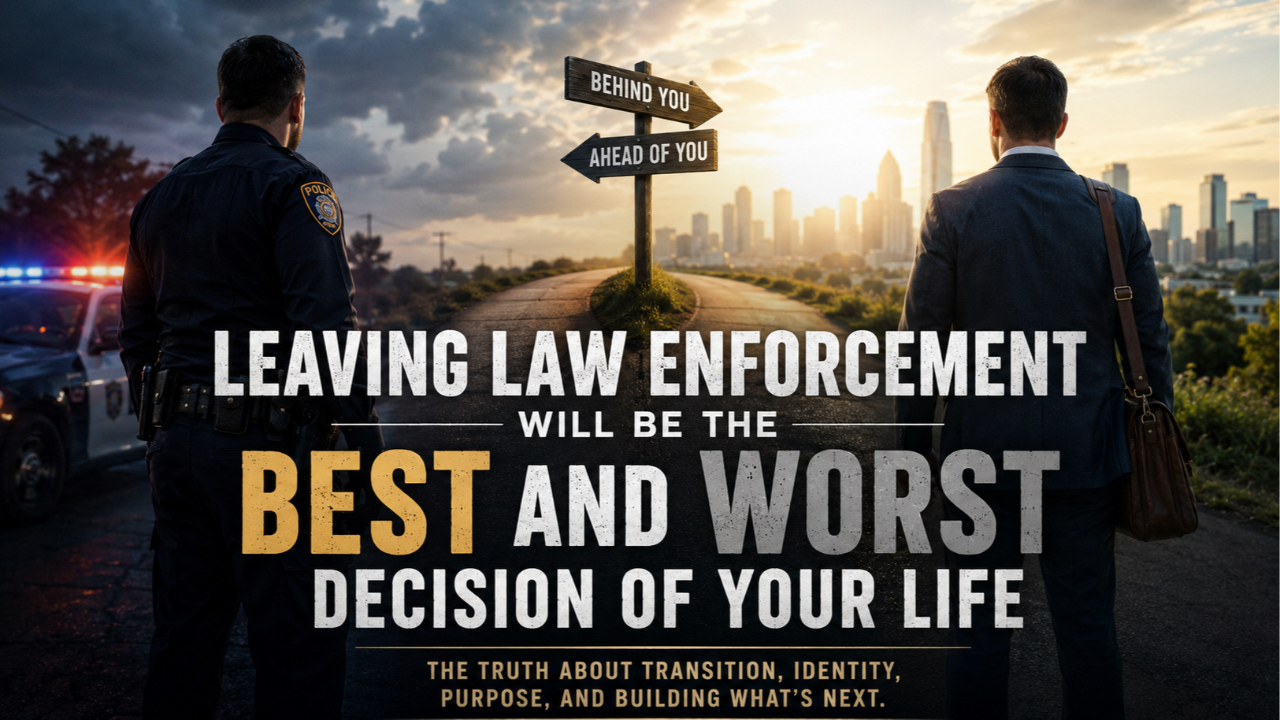
There is a moment that comes for many law enforcement officers, though it arrives differently for each of them. Sometimes it comes quietly, in the back of a patrol car after a long shift, while sitting alone with the radio crackling in the dark. Sometimes it comes after a hard day, a critical incident, a betrayal by the institution, a family milestone missed, or a realization that the job has slowly started taking more than it gives. Sometimes it comes with certainty, and sometimes with guilt. But when it comes, it often carries the same unsettling truth: leaving law enforcement may be the best decision of your life and the worst decision of your life at the exact same time.
That is the paradox of transition.
For those who have worn the badge, the career is not just a job. It is a calling, an identity, a lifestyle, a shield, and at times a burden. It shapes how you think, how you speak, how you scan a room, how you trust people, and how you measure danger. It becomes the lens through which you interpret the world. You do not simply work in law enforcement. You become law enforcement. And that is why leaving can feel less like changing careers and more like losing a piece of yourself.
At the same time, leaving can open a door you never knew existed. It can give you back time, energy, dignity, creativity, family, financial growth, and a sense of purpose that is not limited to uniforms, radio traffic, or command structure. It can allow your experience to matter in new ways. It can let you build a life that still reflects service, but not sacrifice at the expense of everything else.
That is why leaving can be both the hardest and healthiest choice an officer ever makes.
The Badge Becomes Part of Who You Are
One of the most difficult parts of leaving law enforcement is not the job itself. It is what the job has done to your identity.
From the outside, people often think officers are simply changing employers. They imagine a résumé update, a new suit, a new office, and perhaps a slightly easier schedule. They do not always understand that the badge often becomes inseparable from the person wearing it. It is there in your posture, in your habits, in your mindset, in the way you enter a room and evaluate risk without even trying. It is there in your language, your humor, your friendships, and your sense of duty.
For years, the answer to the question “What do you do?” has carried immediate clarity and respect. People know what police work means. They understand, at least in broad strokes, that you respond when others run, you make decisions under pressure, and you deal with people on their worst days. That identity can be deeply validating. It can also become dangerously limiting.
When officers begin preparing to leave, many discover that they do not know how to introduce themselves without the title. They wonder who they are without the uniform, the authority, the structure, and the mission. They may feel embarrassed by how much of their self-worth has become tied to the role. That is not weakness. It is the natural result of spending years in a profession that demands total commitment.
The hardest truth is that many officers do not just fear leaving the job. They fear leaving the version of themselves that the job helped create.
The Emotional Cost of Staying Too Long
There are officers who stay in law enforcement long after the career has stopped serving them. Some stay because they feel loyal. Some stay because they do not know what else they would do. Some stay because the paycheck is reliable, the benefits are strong, and the retirement system offers a promise of security if they just endure a little longer. Some stay because they believe leaving would somehow be quitting, or betraying the profession, or admitting that they cannot handle it anymore.
But staying too long can quietly drain a person from the inside.
The job has a way of sharpening you while also wearing you down. It teaches resilience, but it also teaches vigilance that never fully turns off. It can make you strong, but also tired in ways that sleep alone does not fix. It can make you proud, but also numb. You may become the person who can handle a crisis at work yet struggles to be present at home. You may know how to calm a room full of strangers but not how to rest your own mind.
Over time, many officers begin to realize that they are living around the job instead of through their own life. The shift work, the stress, the missed holidays, the constant readiness, the hyperawareness, the paper trails, the politics, and the emotional toll of seeing human suffering day after day can create a life where survival becomes the default setting.
Leaving law enforcement does not erase that cost. But for many, it stops the accumulation.
And that is one of the most powerful reasons transition becomes necessary.
Why Leaving Feels Like Loss
Even when the decision is right, leaving law enforcement can feel like grief.
You may miss the camaraderie more than you expected. You may miss the shared language of the job, the unspoken understanding among people who have been there, the dark humor, the trust built through hardship, and the strange comfort of being around people who do not need explanations. You may miss the sense of urgency, the clear mission, and the knowledge that your work mattered in real time.
You may also grieve the version of yourself that felt certain. In law enforcement, even in chaos, there is often clarity of purpose. You know your role. You know the structure. You know the culture. You know how to win in that environment, at least most of the time. Outside of it, you may feel like a beginner again. That can be humbling, frustrating, and deeply uncomfortable.
A lot of officers are used to being competent in high-stakes environments. In the private sector, that competence does not always translate immediately in the ways you expect. The language is different. The pace is different. The expectations are different. The reward system is different. You may suddenly find yourself in meetings where people care more about process than instinct, more about metrics than urgency, and more about consensus than command presence.
That adjustment can sting. It can make you feel underestimated. It can make you wonder whether you made a mistake. It can make you miss the simplicity of a world where your skill set was obvious and respected.
That is part of the worst side of leaving.
But the Private Sector Can Reward What Law Enforcement Taught You
The same experiences that made law enforcement difficult can make you extraordinarily valuable in the private sector.
Officers bring a set of traits that are hard to teach and even harder to fake. You know how to assess risk quickly. You know how to stay calm when others panic. You know how to write clearly, think critically, interact with difficult people, de-escalate conflict, investigate problems, and make decisions with incomplete information. You have handled pressure, accountability, public scrutiny, and responsibility that most people never experience.
That matters everywhere.
Private companies need people who can lead through uncertainty, manage crises, protect people and property, solve complex problems, and communicate with professionalism under stress. They need people who can spot what others miss. They need people who know how to think several steps ahead. They need people with integrity, discipline, and the ability to act when it counts.
Law enforcement gives you all of that and more.
The challenge is not whether your experience has value. The challenge is learning how to explain that value in a language the private sector understands. Once you do that, the possibilities expand quickly. Security, compliance, investigations, risk management, emergency management, training, operations, logistics, corporate safety, fraud prevention, loss prevention, emergency preparedness, executive protection, and countless leadership roles can all benefit from the same traits that once made you effective on the street.
You are not starting over. You are translating.
The Private Sector Can Give You More of Your Life Back
For many officers, one of the greatest benefits of leaving law enforcement is the chance to reclaim time.
Time with your spouse. Time with your children. Time to eat dinner at a normal hour. Time to attend a school event without checking your watch. Time to sleep through the night. Time to take a vacation without being on call in your head. Time to exercise, read, travel, or simply exist without the constant pressure of the next call.
People outside the profession sometimes underestimate how much law enforcement takes from family life. They do not always see the missed birthdays, the holiday changes, the late arrivals, the exhausted silences, the emotional distance, or the way the job can become the third person in the relationship. It is not that officers do not love their families. It is that the job often makes loving them harder in practical, daily ways.
Leaving can restore balance.
That does not mean life becomes perfect. Every career has stress. Every employer has demands. But the pressure is often different. In many private sector jobs, the schedule is more predictable, the demands are more sustainable, and the work does not follow you home in the same way. That predictability can be life changing.
There is a special kind of freedom in being able to plan a week without wondering whether a surprise double shift, a callout, or a critical incident will erase it. There is a deep peace in being available to the people who have waited your whole career for more of you.
Sometimes the Money Is Better Too
Another reason many officers find the transition worth it is financial growth.
Law enforcement has long demanded a level of responsibility that is not always matched by compensation. Many officers work long hours, nights, weekends, and holidays for pay that does not reflect the stress, danger, and emotional load of the work. Even with good benefits, retirement plans, and overtime opportunities, many officers eventually recognize that their earning potential is capped in ways that may not align with their skill level or value.
The private sector can change that.
In many fields, former officers are able to earn more, sometimes significantly more, especially when they move into security leadership, corporate investigations, compliance, operations, or risk management. Their law enforcement background gives them credibility, and their work ethic gives them an edge. They often bring a level of professionalism and judgment that employers desperately need.
Of course, higher pay is not guaranteed. Some transitions require patience and strategic planning. Some roles offer less initial income but greater long-term advancement. Some companies value your experience immediately, while others need help understanding it. But for many officers, the financial upside becomes real once they learn how to position themselves correctly.
That matters because financial security changes a family’s future. It reduces stress. It expands options. It creates room to breathe.
Identity Loss Can Become Identity Expansion
One of the most encouraging parts of transition is realizing that leaving law enforcement does not mean abandoning your identity. It means expanding it.
You are still the same person with the same core values. You still know how to protect, serve, lead, and respond under pressure. But now you have the chance to become more than a title. You can become a spouse who is more present, a parent who is more available, a professional who is more versatile, and a human being who is not always on edge.
That process is not instant. In fact, it often feels awkward at first. Officers are used to certainty, and transition is full of uncertainty. You may not know exactly which role is right. You may need to rebuild confidence outside the badge. You may have to learn how to market yourself, network, interview, and explain your background in a way that resonates with employers who have never walked a beat or worked a scene.
But that learning curve is not a sign that you do not belong. It is a sign that you are growing.
You spent years mastering one world. Now you are learning another.
The Best Decision Because It Honors the Life You Still Have
For some officers, leaving law enforcement is the first time they truly begin to honor the life they still have left to live.
That may sound dramatic, but anyone who has carried the weight of the job long enough understands it. The work can make you deeply aware of how fragile life is. You see people at their worst, their most vulnerable, and sometimes their final moments. You know better than most that tomorrow is not promised.
So why would anyone spend the rest of their life clinging to a career that no longer fits, just because it once did?
There is courage in staying. There is also courage in leaving.
Leaving says that your family matters. Your health matters. Your future matters. Your peace matters. It says that service did not have to destroy you to be meaningful. It says that you can continue living with honor in a different arena.
That is not weakness. That is wisdom.
The Worst Decision Because Something Real Is Being Left Behind
And yet, even when it is right, leaving can still be the worst decision of your life in some moments.
You may miss the mission. You may miss the purpose. You may miss the brothers and sisters who understood the world the way you did. You may miss being needed in a way that was immediate and concrete. You may miss the pride of putting on a uniform that represented something bigger than yourself.
There may be days when you sit in a different office, at a different desk, in a different kind of stress, and wonder whether you gave up too much. There may be moments when you hear sirens in the distance and feel a pull in your chest. There may be nights when you question whether a safer schedule is worth the emotional ache of being removed from the work that shaped you.
That pain is real. It should not be minimized.
Leaving law enforcement is not a decision to romanticize. It is often messy, emotional, and layered with uncertainty. It asks you to let go of a life that was hard but meaningful, and to trust that meaning can exist beyond the badge.
Sometimes that trust takes time.
You Are Not Walking Away From Service
Perhaps the most important truth is this: leaving law enforcement does not mean you are walking away from service. It means you are choosing a different way to live it.
The private sector needs people who understand consequences, responsibility, teamwork, and resilience. Communities need leaders who can bridge structure and empathy. Organizations need people who can assess danger without creating panic, solve problems without losing composure, and bring order to chaos without forgetting the human being at the center.
That is what officers bring.
Your experience is not wasted because it does not remain in uniform. It becomes more portable than you were ever taught to believe. The same lessons that helped you survive the job can help you thrive elsewhere. The same discipline that got you through hard nights can help you build a new future. The same sense of duty that once kept you moving can now help you build a life with more margin, more meaning, and more room for the people you love.
Leaving may feel like loss. It may feel like grief. It may feel like stepping into the unknown without a guarantee.
But it can also feel like relief. It can feel like healing. It can feel like coming home to yourself.
That is why leaving law enforcement may be the best and worst decision of your life.
It is the worst because you are letting go of something powerful, familiar, and deeply woven into who you are.
It is the best because you are choosing to turn that same strength toward a future that includes more life, not less.
And for many officers, that is the courage transition requires.
How Recruiting Heroes Helps Officers Transition Successfully
Leaving law enforcement is not just a career move. It is a reinvention process that most officers are never formally prepared for. You are trained extensively on how to do the job, how to survive the job, and how to serve the public through the job. What you are rarely taught is how to translate that experience into something else without losing the value of what you have built over the years.
That gap is where many transitions struggle. Not because officers lack ability, but because they lack translation. They know how to do the work, but they do not always know how to communicate it in a way that makes hiring managers in the private sector immediately understand its value.
This is where structured guidance becomes critical.
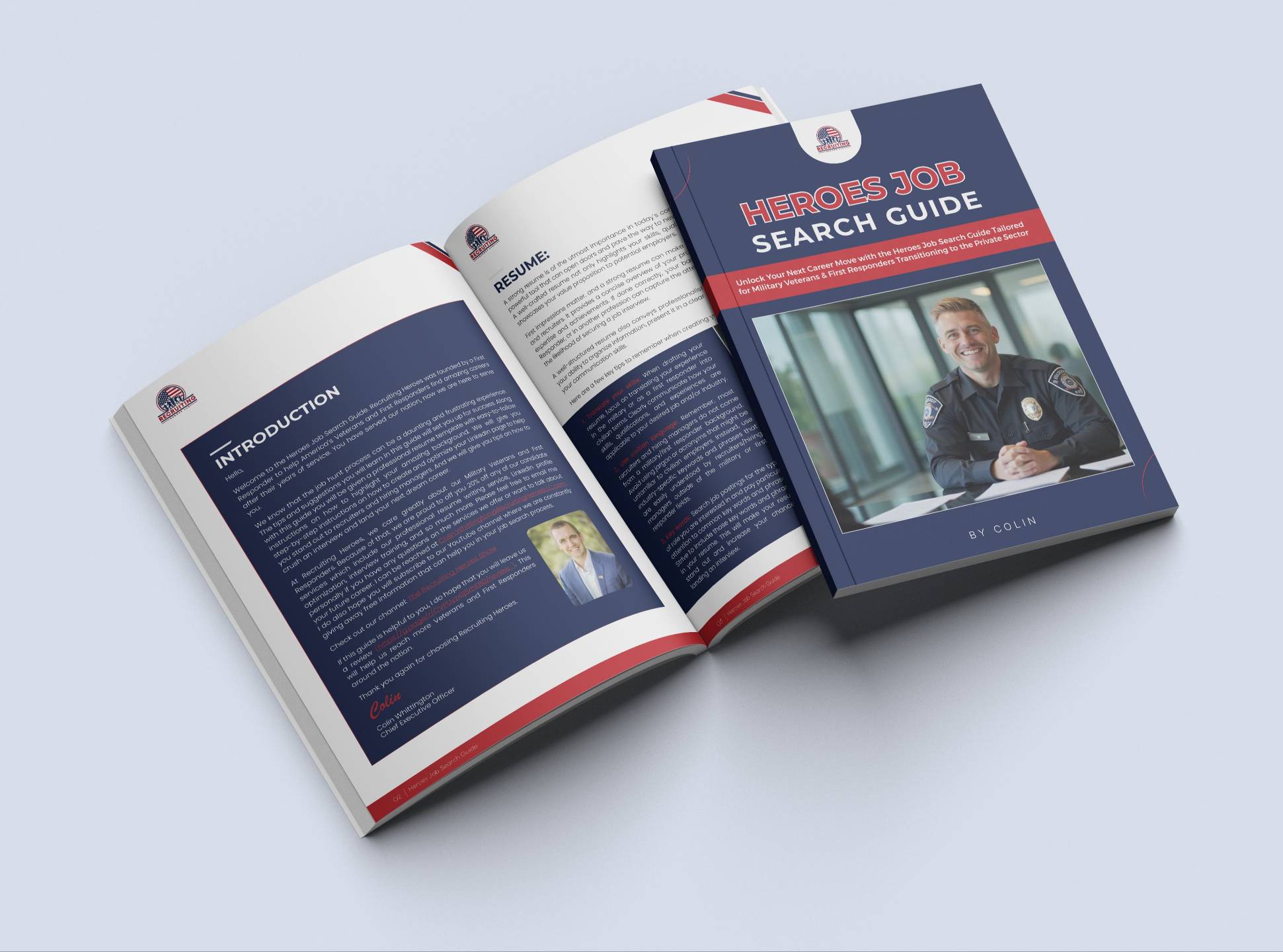
Through Recruiting Heroes LLC, I work directly with law enforcement officers, military veterans, and first responders to bridge that gap between identity and opportunity. The goal is not to rewrite who you are. The goal is to make sure the next chapter of your career fully reflects the depth of what you have already done.
Most officers underestimate how transferable their experience truly is. What feels normal inside the profession is often highly valuable outside of it. Investigations become corporate fraud prevention. Patrol experience becomes risk assessment and operational awareness. Report writing becomes executive communication. Supervisory experience becomes leadership and team management in structured organizations. Crisis response becomes emergency management and business continuity planning.
The challenge is not the experience itself. The challenge is articulation.
A major part of what I help officers do is rebuild their professional narrative. That starts with a resume that does more than list duties. It has to tell a story of impact, leadership, and results. It has to shift language from internal law enforcement terminology into private sector keywords that hiring systems and recruiters actually recognize. It has to position the officer not as someone leaving a job, but as someone bringing a high level of operational and leadership experience into a new environment.
That includes translating things like:
- Years of patrol experience into risk mitigation, situational assessment, and stakeholder protection.
- Investigation work into analytical thinking, data interpretation, fraud detection, and case management.
- Supervisory roles into team leadership, performance management, and operational oversight.
- Training experience into instructional design, onboarding systems, and workforce development.
Once that foundation is built, the next step is visibility.
Many officers leave the profession with strong skills but very little digital presence. In today’s hiring landscape, that can limit opportunities significantly. LinkedIn is no longer optional. It is often the first impression a hiring manager has of you outside of a résumé. That means your profile has to reflect clarity, direction, and alignment with the roles you are targeting, not just a history of public service.
I help officers structure that presence in a way that feels authentic while also being competitive in the private sector. That includes headline positioning, about sections that translate experience effectively, and content that reinforces credibility without overcomplicating the message.
Beyond documents and profiles, the transition also requires confidence in interviews. Many officers are used to structured questioning, rapid decision-making, and high-stakes environments, but interviewing in the corporate world can feel unfamiliar. The expectations are different. The language is different. Even the tone is different.
Part of the process is learning how to communicate your experience without either underselling it or overwhelming the listener. It is about clarity, not jargon. Precision, not intensity. Confidence, not defensiveness. When done correctly, hiring managers begin to see something very powerful: someone who has already performed under pressure and can bring that stability into their organization immediately.
There is also a deeper layer to this work that goes beyond employment.
A successful transition is not only about landing a job. It is about rebuilding identity in a way that does not leave the officer feeling disconnected from their past. Many people assume the goal is to move on from law enforcement. In reality, the goal is to move forward with it integrated into who you are becoming.
You do not lose your service record. You do not lose your experience. You do not lose your identity. You learn how to carry it differently.
That is often the difference between a transition that feels like loss and one that feels like growth.
The officers who struggle the most are not the least capable. They are often the most committed. They gave everything to the job, and in doing so, they never fully prepared for what life looks like outside of it. The officers who succeed in transition are not abandoning that commitment. They are redirecting it into something sustainable.
This is where having structured support matters. Not generic career advice, but targeted translation of a very specific background into a very different market.
At its core, this work is about reminding officers of something they already know but often forget during transition. You have already done hard things. You have already operated in uncertainty. You have already adapted under pressure. The private sector is not asking you to become someone new. It is asking you to take what you already are and apply it in a different environment.
The badge may come off. The mission does not disappear. It evolves.
And when that evolution is done correctly, what once felt like the end of one identity becomes the beginning of a broader, more sustainable one.
If you want support during your transition from law enforcement, please reach out to me directly and/or visit RecruitingHeroesLLC.com to learn how I can help you!
Stay safe, Heroes!
Colin