CORPORATE INVESTIGATIONS MANAGER A High-Value Private Sector Career Path for Law Enforcement Professionals
May 25, 2026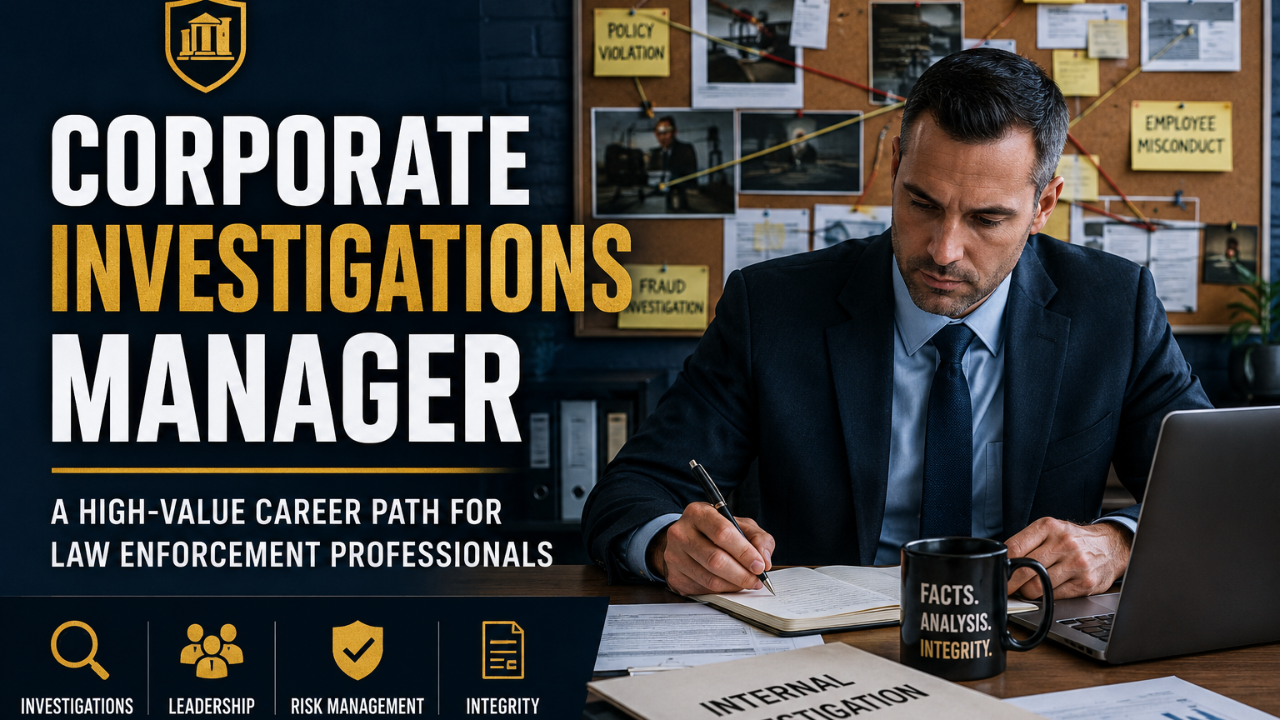
This article is part of my ongoing series designed to help law enforcement professionals successfully transition into the private sector. In each installment, I break down a specific career path, explain why it is a strong fit, and show you exactly how to position yourself through your resume, cover letter, LinkedIn profile, and interview approach.
So far, we have covered several outstanding roles including SIU, Customer Success Manager, Security Manager and Director, Threat Intelligence Analyst, Executive Protection Specialist, Fraud Investigator, Physical Security Specialist, Risk & Compliance, Public Safety Technology Sales, SOC Analyst, Risk Management, and Private Investigator roles. Each of these career paths provides a different way to leverage the skills and experience built throughout a law enforcement career.
In this article, we are focusing on Corporate Investigations Manager roles in the private sector.
This is one of the strongest long-term career paths for law enforcement professionals because it combines investigations, leadership, risk management, and business operations into a highly respected corporate function.
If you have experience conducting investigations, managing cases, supervising personnel, interviewing subjects, handling sensitive incidents, writing reports, coordinating with stakeholders, or leading investigative teams, this can be an exceptional fit with significant earning potential and long-term career growth.
Remember, I am currently running a Memorial Day Special on my candidate services. For the next 24 hours, professional resume writing services are just $299 instead of $399. I also offer LinkedIn optimization, interview prep, career coaching, and full Reverse Recruiting services for law enforcement professionals transitioning into the private sector.
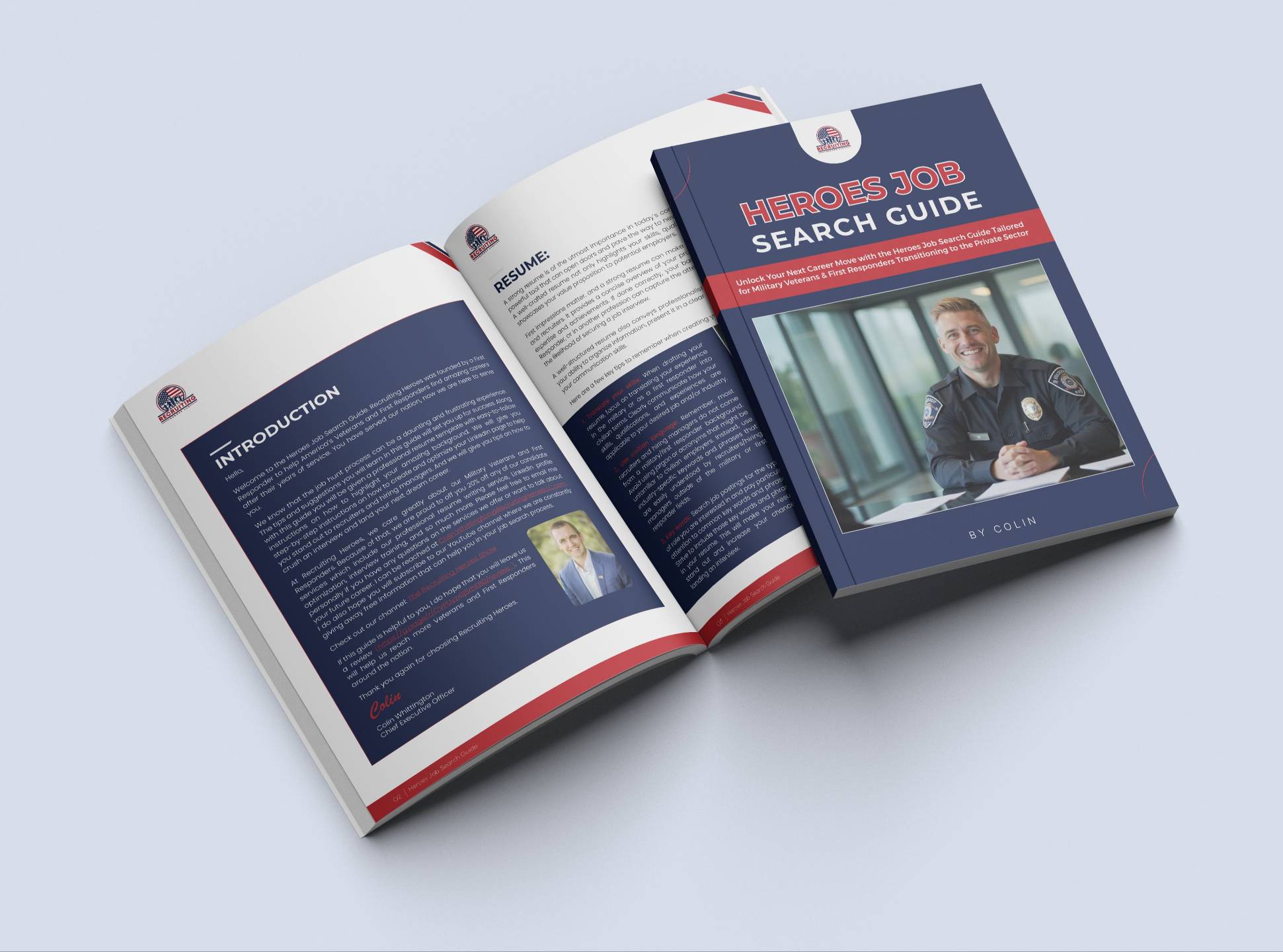
You can also grab a copy of my book, Beyond the Thin Blue Line, which breaks down strategies for successfully transitioning from law enforcement into civilian careers.
WHAT IS A CORPORATE INVESTIGATIONS MANAGER?
Corporate Investigations Managers oversee investigations inside private companies and organizations. These professionals are responsible for identifying, investigating, documenting, and resolving incidents that may expose the organization to financial, operational, reputational, legal, or security risk.
Unlike traditional criminal investigations, corporate investigations are typically administrative, internal, financial, compliance-related, or policy-focused in nature.
These professionals may investigate:
- Employee misconduct
- Internal theft
- Fraud and financial crimes
- Workplace violence concerns
- Harassment or ethics complaints
- Vendor fraud
- Data misuse or insider threats
- Corruption or bribery allegations
- Compliance violations
- Corporate policy violations
- Supply chain theft or organized retail crime
Corporate Investigations Managers are often responsible not only for conducting investigations themselves, but also for managing investigative programs, coordinating with executives, working alongside HR and legal departments, and ensuring investigations are handled professionally and defensibly.
Many companies view this role as a critical component of corporate risk management and organizational integrity.
Common Responsibilities Include:
- Managing complex internal investigations
- Conducting interviews and fact-finding inquiries
- Reviewing evidence, records, and investigative findings
- Preparing executive-level investigative reports
- Coordinating with HR, legal, compliance, and security teams
- Managing investigative case workflows and documentation
- Identifying trends, vulnerabilities, and operational risks
- Supporting workplace safety and compliance initiatives
- Overseeing third-party investigative vendors or investigators
- Providing investigative guidance to leadership teams
This role rewards professionalism, analytical thinking, discretion, communication skills, leadership, and the ability to handle sensitive situations objectively.
WHY THIS ROLE IS A STRONG FIT FOR LAW ENFORCEMENT PROFESSIONALS
This role aligns extremely well with the skillsets developed throughout a law enforcement career.
Many officers underestimate how valuable their investigative and leadership experience actually is in the corporate world.
The reality is this:
Corporate employers desperately need professionals who can gather facts objectively, conduct defensible investigations, document findings clearly, manage sensitive situations professionally, and protect organizations from risk.
Law enforcement professionals often spend years building these exact capabilities.
Think About Your Experience:
- Conducting investigations
- Interviewing witnesses, victims, and suspects
- Managing sensitive incidents
- Writing detailed reports
- Supervising investigations and personnel
- Handling workplace conflict and critical incidents
- Identifying patterns and inconsistencies
- Working with multiple stakeholders
- Maintaining professionalism under pressure
- Managing confidential information
That is highly valuable experience in the private sector.
The biggest adjustment is usually learning the corporate environment and understanding how investigations support business operations rather than criminal prosecution.
Instead of focusing on arrests and charges, corporate investigations focus on risk reduction, policy compliance, employee safety, ethics, operational integrity, and organizational protection.
Professionals Who Tend to Perform Exceptionally Well in These Roles Are:
- Strong investigators
- Excellent communicators
- Professional and composed under pressure
- Analytical thinkers
- Detail-oriented report writers
- Strong interviewers
- Comfortable briefing leadership
- Able to maintain confidentiality and discretion
- Experienced managing complex or sensitive situations
These are all capabilities law enforcement professionals develop throughout their careers.
WHAT THE JOB ACTUALLY LOOKS LIKE
Corporate Investigations Managers often work inside large corporations, retailers, financial institutions, healthcare systems, tech companies, manufacturing organizations, logistics companies, or consulting firms.
The day-to-day work can vary significantly depending on the industry and company structure.
Some professionals focus heavily on employee misconduct and HR-related investigations.
Others focus on fraud, financial crimes, insider threats, workplace violence prevention, or supply chain investigations.
A Typical Day May Include:
- Reviewing allegations or incident reports
- Conducting witness and subject interviews
- Analyzing investigative findings and evidence
- Coordinating with HR and legal counsel
- Managing multiple active investigations
- Preparing investigative summaries and executive briefings
- Identifying policy or compliance violations
- Reviewing surveillance footage or digital records
- Supporting workplace violence prevention initiatives
- Managing external investigative vendors or consultants
- Developing investigative procedures and protocols
Examples:
A Corporate Investigations Manager at a retailer may investigate organized retail crime, internal theft, or supply chain fraud.
A manager at a financial institution may oversee investigations into fraud, ethics violations, or insider threats.
A manager at a technology company may investigate data misuse, intellectual property theft, or workplace misconduct concerns.
The work is often highly professional, fast-paced, and heavily centered around communication, documentation, and risk management.
HOW TO POSITION YOURSELF FOR THESE ROLES
RESUME
Your resume needs to position you as an investigative and leadership professional, not simply a police officer.
This is extremely important.
Many candidates fail because their resumes focus too heavily on patrol tasks, enforcement activity, or tactical work while completely underselling their investigative, analytical, leadership, and risk-management capabilities.
Corporate employers are hiring professionals who can conduct investigations, manage risk, communicate effectively, and support organizational decision-making.
Your Resume Should Emphasize:
- Investigations
- Leadership
- Case management
- Interviewing
- Analytical thinking
- Documentation
- Stakeholder coordination
- Risk mitigation
- Policy enforcement
- Operational oversight
Strong Examples Include:
- Conducted complex investigations involving interviews, evidence analysis, surveillance, and case development to support administrative, criminal, and operational findings
- Managed sensitive investigations involving workplace incidents, misconduct allegations, fraud indicators, and policy violations while maintaining confidentiality and investigative integrity
- Prepared detailed investigative reports, executive summaries, and evidentiary documentation used in legal proceedings, leadership decision-making, and operational review
- Coordinated with internal departments, external agencies, legal teams, and stakeholders to support investigative continuity and risk mitigation efforts
- Identified investigative trends, behavioral indicators, and operational vulnerabilities through detailed analysis and investigative review
- Managed multiple active investigations simultaneously while maintaining documentation accuracy, case organization, and investigative timelines
- Led investigative initiatives and provided guidance to personnel during complex or high-risk incidents
You Should Also Highlight:
- Supervisory experience
- Internal investigations
- Fraud investigations
- Case management
- Interview and interrogation experience
- Crisis management
- Policy enforcement
- Interagency coordination
- Threat assessment experience
- Workplace violence response
- Digital investigations
- OSINT or cyber investigations
- Executive briefings or leadership communication
Metrics matter as well.
Include things like:
- Number of investigations managed
- Personnel supervised
- Reduction in losses or incidents
- Cases resolved
- Operational improvements implemented
- Investigative workload handled
MEMORIAL DAY SPECIAL
For the next 24 hours, I am running a Memorial Day Special on professional resume writing services.
Professional resume packages are currently just $299 instead of the normal $399 pricing.
COVER LETTER
Your cover letter should position you as an experienced investigative leader capable of handling sensitive situations professionally and objectively.
The goal is not to convince employers you can learn investigations.
The goal is to show them you have already spent years conducting investigations, managing incidents, documenting findings, and supporting decision-making in high-pressure environments.
Focus On:
- Your investigative background
- Your leadership experience
- Your ability to manage sensitive situations
- Your report writing and documentation skills
- Your experience conducting interviews and gathering facts
- Your ability to communicate with leadership and stakeholders
- Your professionalism and discretion
Strong Positioning Statement Example:
“Throughout my law enforcement career, I have led and supported complex investigations involving sensitive incidents, workplace concerns, fraud indicators, and operational risk. My experience conducting investigations, managing personnel, coordinating with stakeholders, and producing clear investigative documentation has prepared me to effectively support corporate investigative and risk management operations within a private-sector environment.”
That is the bridge between law enforcement and corporate investigations.
Your LinkedIn profile should immediately communicate that you are an investigative and risk-management professional with leadership experience.
Do not position yourself simply as a police officer seeking private-sector opportunities.
Recruiters hiring Corporate Investigations Managers are searching for professionals with backgrounds in investigations, compliance, risk, security, leadership, and operations.
Headline Example:
Corporate Investigations | Internal Investigations | Risk Management | Workplace Investigations | Investigative Leadership
Your About Section Should Focus On:
- Investigative leadership
- Case management
- Risk mitigation
- Interviewing and fact-finding
- Operational oversight
- Stakeholder communication
- Investigative documentation
- Confidential investigations
- Crisis management
- Professional integrity
The tone should feel corporate, analytical, and leadership-oriented.
COMPANIES HIRING CORPORATE INVESTIGATIONS MANAGERS
Organizations hiring these professionals include:
- Amazon
- Walmart
- Target Corporation
- JPMorgan Chase & Co.
- Bank of America
- Meta
- FedEx
- CVS Health
- Deloitte
Common Job Titles Include:
- Corporate Investigations Manager
- Corporate Investigator
- Internal Investigator
- Workplace Investigations Manager
- Employee Relations Investigator
- Ethics & Compliance Investigator
- Risk Investigator
- Fraud Investigations Manager
- Investigations Supervisor
- Investigative Program Manager
COMMON MISTAKES LAW ENFORCEMENT CANDIDATES MAKE
- Focusing too heavily on enforcement rather than investigations
- Writing resumes that sound tactical instead of analytical
- Failing to highlight leadership and stakeholder communication
- Not emphasizing report writing and documentation
- Using excessive law enforcement jargon
- Underselling investigative credibility and professionalism
- Failing to translate supervisory experience into leadership language
Corporate employers are not hiring for arrests.
They are hiring professionals who can investigate issues objectively, manage risk, document findings clearly, and support organizational decision-making.
That distinction matters significantly.
WANT HELP MAKING THIS TRANSITION?
If you are serious about transitioning into corporate investigations or other private-sector leadership roles, you need more than a generic resume.
You need positioning.
That is exactly why I built my Private Sector Ops Plan.
Inside the Program, You Get:
- A professionally written resume tailored to your target role
- A professionally written cover letter
- An optimized LinkedIn profile
- A private coaching call with me
- Lifetime access to the Heroes Academy
- Lifetime access to the Heroes Community for coaching, networking, and job leads
The goal is simple:
Help you translate your law enforcement experience into high-value private-sector opportunities without starting over.
Learn more here:
Recruiting Heroes LLC Private Sector Ops Plan
FINAL THOUGHT
Corporate Investigations Manager roles are one of the strongest long-term transition opportunities available for law enforcement professionals.
These roles allow you to continue using the investigative mindset, leadership experience, communication skills, and analytical capabilities you spent years developing throughout your career.
You are not walking away from your experience.
You are repositioning it into a corporate environment where investigations, professionalism, leadership, and risk management still carry tremendous value.
If positioned correctly, corporate investigations can become an extremely rewarding, stable, and financially strong private-sector career path.
In the next article, we will break down another high-value private-sector role and show you exactly how to make the move.
Stay safe, Heroes!
Colin