How to Successfully Transition from Law Enforcement to the Private Sector
Dec 27, 2025
For law enforcement officers, policing is far more than a paycheck or a title. It is an identity forged through shared hardship, high-stakes decision-making, and a commitment to serving others in moments of crisis. The badge represents responsibility, sacrifice, structure, and purpose. For many officers, it becomes inseparable from who they are as a person.
At some point, however, many officers begin to think about life beyond law enforcement. That moment may arrive quietly or be forced by circumstances. Retirement eligibility, physical wear and tear, burnout, family needs, agency politics, or simply a desire for new challenges can all trigger the realization that it may be time for a change. While the decision to explore life after policing is deeply personal, it can also feel overwhelming, confusing, and even frightening.
The civilian job market operates very differently from law enforcement. The rules are unfamiliar. The language is different. The expectations are often unclear. Many officers struggle with fundamental questions such as where to begin, what careers even make sense, and whether employers will truly value their experience. Translating years or decades of service into a resume that resonates with civilian hiring managers can feel like learning an entirely new skill or language. Preparing for interviews can feel awkward and unnatural when your career has been built on competence, credibility, and action rather than self-promotion.
The good news is this: you are not alone, and you are not starting from zero. Thousands of former law enforcement officers have successfully transitioned into meaningful, well-paying private-sector careers. Many are thriving in roles that offer flexibility, growth, and renewed purpose. With the right mindset, planning, and strategy, you can do the same.
This guide is designed to walk you through the transition step by step. It will help you understand the emotional challenges of leaving law enforcement, identify your transferable skills, position your experience for civilian employers, and take practical action toward your next career.
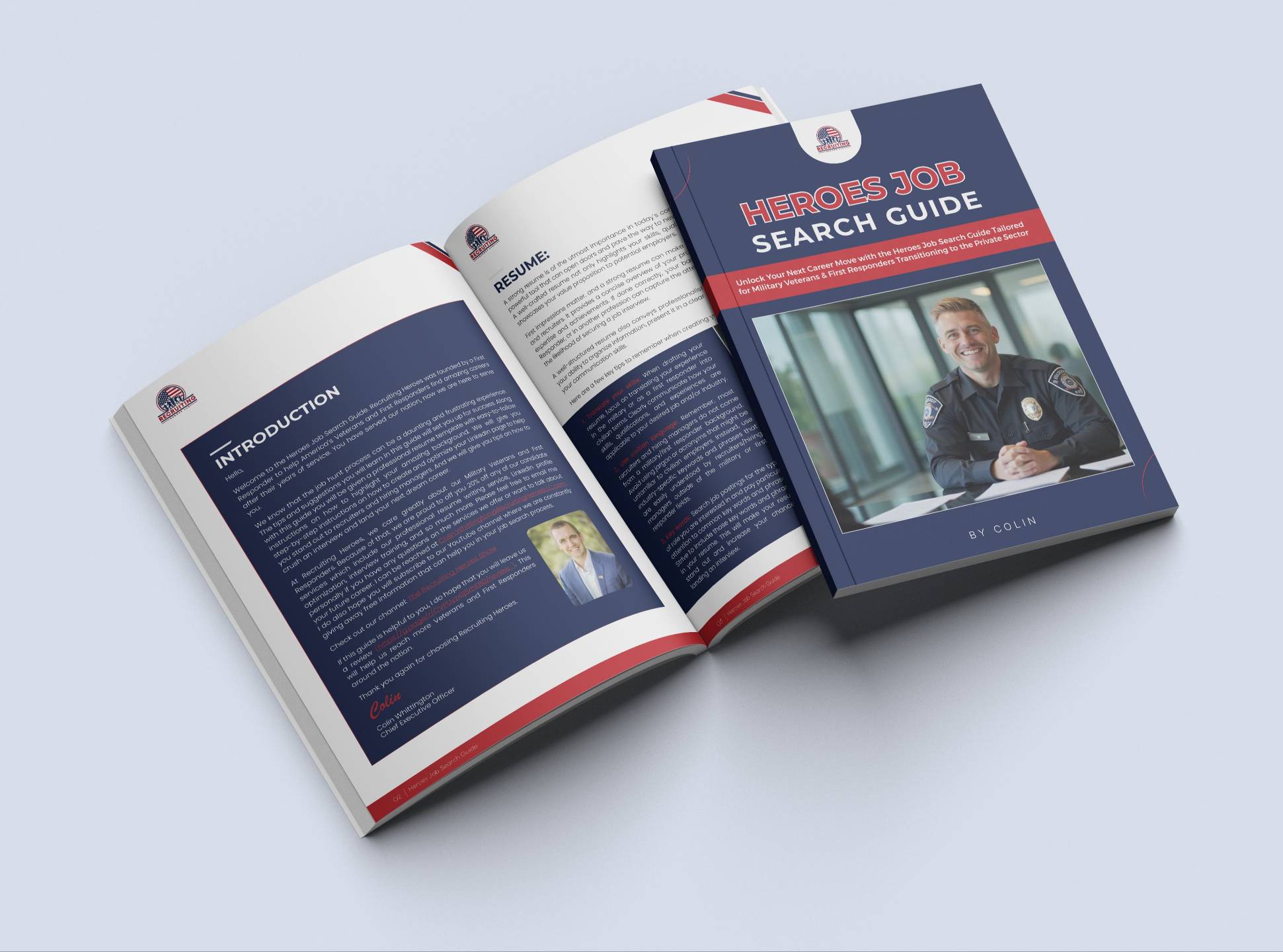
For a comprehensive, step-by-step resource on resume writing, LinkedIn optimization, and interview preparation, be sure to download my FREE Heroes Job Search Guide.
For the next 5 days, I am also offering a $400 discount on my career transition program. My Private Sector Ops Plan gives you everything you need to find your next career:
- A professionally written resume that truly highlights your experience and value
- A fantastic cover letter that elevates you past other candidates and that can easily be tailored towards the companies and roles you apply to.
- An optimized LinkedIn profile to attract recruiters.
- A lifetime membership to the Heroes Academy, my flagship online course that teaches you about the various steps in landing a private sector role.
- A lifetime membership to the Heroes Community, my private community where I host virtual coaching calls, host QandA sessions, share job opportunities, introduce members to recruiters, and much more
- A private coaching call with me to develop your job search strategy
This program is by far the most popular service that I offer. Due to the significant amount of time I give to those who enroll in this program, the cost of the Private Sector Ops Plan is typically $797. However, until New Years Eve you can get this program for just $397. Still a few months or even years from transitioning? Lock in this program now and start working the steps whenever is right for you. You get lifetime access to me and my services.
Learn more here: https://www.recruitingheroesllc.com/sales-page-8efb396e-3454-4eaa-be99-1291f042551e
Now, enjoy this article!
Understanding the Emotional and Psychological Shift
Leaving law enforcement is not like leaving a traditional job. It is stepping away from a tightly structured environment, a mission-driven culture, and a sense of belonging that few professions can replicate. Many officers underestimate the emotional weight of this transition and focus solely on logistics like resumes and job applications. While those pieces matter, addressing the psychological side of the transition is just as important.
Common challenges officers experience include:
Loss of identity Law enforcement is not just something you do; it becomes part of who you are. Your schedule, social circle, sense of purpose, and even how others see you are often tied to the badge. Stepping away can create a feeling of emptiness or uncertainty about who you are without it.
Fear of the unknown Many officers have spent their entire adult lives in policing. The idea of navigating a civilian workplace, corporate culture, or private-sector expectations can feel foreign and intimidating.
Concerns about financial stability Leaving a government position with a pension, benefits, and job security can trigger anxiety. Officers often worry about salary stability, healthcare costs, and long-term financial planning.
Loss of camaraderie The bond between officers is unique. Civilian workplaces rarely replicate the same level of trust and shared experience, which can lead to feelings of isolation early in the transition.
Acknowledging these challenges does not make you weak. It makes you prepared. The same discipline, situational awareness, and planning that made you successful in law enforcement can be applied to your transition. Surround yourself with supportive people, connect with others who have already made the leap, and give yourself permission to view this as a process rather than a single decision.
Identifying and Reframing Transferable Skills
One of the most common misconceptions officers have is believing their skills only apply to law enforcement. In reality, law enforcement professionals possess some of the most sought-after skills in the civilian workforce. The challenge is not whether you have value, but whether you know how to articulate it in civilian terms.
Throughout your career, you have developed competencies that employers actively seek, including:
Leadership and management Officers regularly supervise teams, mentor junior personnel, coordinate multi-agency operations, and make high-impact decisions under pressure. These skills translate directly into management, operations, and leadership roles.
Investigative and analytical thinking Interviewing witnesses, evaluating evidence, identifying patterns, and building cases require critical thinking and attention to detail. These abilities are highly valued in compliance, investigations, risk management, insurance, fraud, cybersecurity, and corporate security roles.
Crisis management and decision-making The ability to remain calm, assess risk, and act decisively in unpredictable situations is a rare and valuable skill set. Employers value professionals who can manage incidents, mitigate risk, and protect people and assets.
Communication and interpersonal skills Officers communicate with diverse populations daily, de-escalate conflict, testify in court, write detailed reports, and collaborate with internal and external stakeholders. These skills translate to client-facing roles, leadership positions, and consulting environments.
Technical and specialized expertise Many officers have experience in digital forensics, surveillance, cyber investigations, intelligence analysis, data management, or specialized equipment. These skills are particularly relevant in cybersecurity, investigations, and technology-driven industries.
Take time to inventory your experience and accomplishments. Identify what you did, how you did it, and the impact it had. Then research how those skills align with industries such as corporate security, investigations, compliance, risk management, insurance, cybersecurity, logistics, operations, and consulting.
If you need help narrowing down career paths, check out my free Identifying Industries of Interest guide or schedule a one-on-one coaching call.
Crafting a Resume for the Civilian Job Market
For many officers, the resume is the most intimidating part of the transition. Law enforcement documentation is factual and procedural, while civilian resumes are strategic marketing documents. A strong resume tells a story about value, results, and relevance.
Key Resume Principles for Former Law Enforcement Officers
Use civilian-friendly language Law enforcement terminology can confuse or alienate hiring managers. Translate your experience into language that emphasizes outcomes rather than enforcement actions. Avoid acronyms, codes, and internal jargon.
Focus on achievements, not job descriptions Employers want to know what you accomplished, not just what you were responsible for. Highlight improvements, efficiencies, reductions, leadership outcomes, and measurable results.
Quantify your impact whenever possible Numbers add credibility. Team size, budget oversight, case volume, response improvements, or operational outcomes help hiring managers understand the scope of your work.
Keep it concise and relevant One to two pages is ideal. Focus on the last 10 to 15 years of experience unless earlier roles are highly relevant to your target position.
Customize for each opportunity Tailoring your resume to the job description dramatically increases your chances of landing interviews. Emphasize the skills and experience that align most closely with each role.
Recommended Resume Structure
- Contact information and LinkedIn profile
- Professional summary that positions you for your target role
- Core skills and competencies
- Professional experience with achievement-focused bullet points
- Education, certifications, and relevant training
- Awards and recognitions presented in a leadership or impact-focused way
If you feel stuck or overwhelmed, working with a resume writer who specializes in law enforcement transitions can save time and significantly improve results.
I am a professional resume writer and have written resumes for over 700 law enforcement officers. You can learn more about my services here: Candidate Services.
You can also download my free resume template here: Resume Template.
Building and Optimizing Your LinkedIn Profile
In today’s job market, LinkedIn is not optional. Recruiters often review LinkedIn profiles before resumes, and many roles are filled through networking rather than online applications. A strong LinkedIn presence increases visibility, credibility, and opportunity.
Key LinkedIn Optimization Strategies
- Use a professional, civilian headshot
- Write a headline that reflects your target role, not your former title
- Craft an engaging About section that tells your story and highlights value
- Mirror your resume achievements in your experience section
- Add relevant skills and keywords recruiters search for
Beyond optimization, engagement matters. Comment on posts, connect with professionals in your target industry, and share insights when appropriate. Networking is not about asking for jobs. It is about building relationships over time.
I genuinely enjoy helping candidates optimize their LinkedIn profiles. If you need help with yours, reach out anytime.
Preparing for and Acing Civilian Job Interviews
For many law enforcement officers, the job interview is the most uncomfortable part of the transition process. In policing, your reputation, certifications, and track record often speak for themselves. In the civilian world, interviews are how employers evaluate not only your qualifications, but your communication style, self-awareness, and cultural fit.
The good news is that interviews are a skill, and like any skill, they can be learned and mastered with preparation.
Research the Company Before the Interview
One of the biggest mistakes candidates make is walking into an interview without fully understanding the organization. Employers can tell immediately when a candidate has done their homework.
Before every interview, spend time researching the company using multiple sources:
Company Website Start with the company’s website. Review the About Us page, mission statement, values, and leadership bios. Understand what the company does, who they serve, and how they describe their culture. Look for language that reflects their priorities such as innovation, customer service, risk management, or compliance. These are clues for how to frame your answers.
Glassdoor and Employee Reviews Glassdoor is an excellent tool for interview preparation. You can often find interview questions that previous candidates were asked, insights into company culture, and information about leadership styles. While not every review is perfectly accurate, patterns matter. If multiple reviews mention fast-paced environments, collaboration, or high accountability, expect interview questions that explore those traits.
LinkedIn and Social Media Review the company’s LinkedIn page, as well as the profiles of people who may be interviewing you. Look at recent posts, announcements, and shared articles. This helps you understand current initiatives and gives you talking points during the interview. You can also gain insight into how formal or casual the company culture may be.
Walking into an interview informed shows initiative, professionalism, and genuine interest in the role.
Understand and Use the STAR Method
Many civilian interviews are behavior-based, meaning you will be asked to describe how you handled past situations. The most effective way to answer these questions is by using the STAR method.
Situation Briefly describe the context or challenge you faced.
Task Explain your responsibility or role in that situation.
Action Describe the specific steps you took to address the situation.
Result Share the outcome and what was achieved. Whenever possible, include measurable results or lessons learned.
For example, instead of giving a vague answer about leadership, you can walk the interviewer through a real-world scenario that demonstrates your skills in action. This structure keeps your answers clear, concise, and impactful.
Before your interview, prepare several STAR stories that highlight leadership, problem-solving, conflict resolution, teamwork, and adaptability. These stories can often be adjusted to fit multiple questions.
Translate Law Enforcement Experience into Civilian Language
During interviews, avoid law enforcement jargon, acronyms, or internal terminology. Interviewers may not understand agency structures, specialized units, or enforcement processes.
Focus instead on skills and outcomes. Talk about managing teams, resolving complex problems, conducting investigations, improving processes, mitigating risk, and working with stakeholders. Always frame your experience in a way that shows how it applies to the role you are pursuing.
Remember, the interviewer is not evaluating how good of a cop you were. They are evaluating how well your experience fits their organization.
Dress Professionally and Appropriately
First impressions matter more in civilian interviews than many officers realize. Even if the company culture appears casual, it is better to be slightly overdressed than underdressed.
For most roles, business professional or business casual attire is appropriate. Ensure your clothing is clean, well-fitted, and conservative. Avoid law enforcement-themed accessories or anything that draws unnecessary attention.
Your appearance should communicate professionalism, confidence, and readiness to represent the organization.
Practice Communication and Body Language
Interviews are not interrogations. They are professional conversations. Maintain eye contact, sit upright, and listen carefully before answering questions. Avoid interrupting or rushing your responses.
Practice answering common interview questions out loud. This helps reduce nerves and improves clarity. If possible, conduct mock interviews with a coach, mentor, or trusted professional who understands civilian hiring expectations.
Ask Thoughtful Questions
At the end of most interviews, you will be asked if you have any questions. Always say yes.
Asking thoughtful questions demonstrates engagement and interest. Examples include:
- What does success look like in this role during the first six months
- How would you describe the team culture
- What challenges is the department or team currently facing
- How does this role contribute to the organization’s overall mission
Avoid questions about salary or benefits unless the interviewer raises the topic first.
Follow Up After the Interview
After the interview, send a brief thank-you email within 24 hours. Thank the interviewer for their time, reinforce your interest in the role, and briefly mention something specific from the conversation. This small step can leave a lasting positive impression.
Final Thoughts
Transitioning from law enforcement to the private sector is a major life change, but it is absolutely achievable with preparation and the right strategy. By addressing the emotional side of the transition, identifying your transferable skills, crafting a strong resume, and building an effective LinkedIn presence, you position yourself for long-term success.
The skills you developed throughout your law enforcement career—leadership, adaptability, problem-solving, communication, and resilience—are not only valuable, they are in demand. With confidence, persistence, and a willingness to learn, you can build a rewarding career beyond the Thin Blue Line.
If you are ready to take the next step, start today. Update your resume, strengthen your LinkedIn presence, and begin exploring opportunities. Your next chapter is waiting.
I am here and excited to help in any way I can.
If you are a law enforcement leader who genuinely cares about your officers, consider bringing me to your agency for my four-hour course, Career Strategies for Law Enforcement Officers. This course equips officers with practical tools and resources to prepare for successful future careers.
Contact me if you are interested.
Have a great day,
Colin