How to Use Job Boards Strategically and Improve Your Job Search
Jul 31, 2026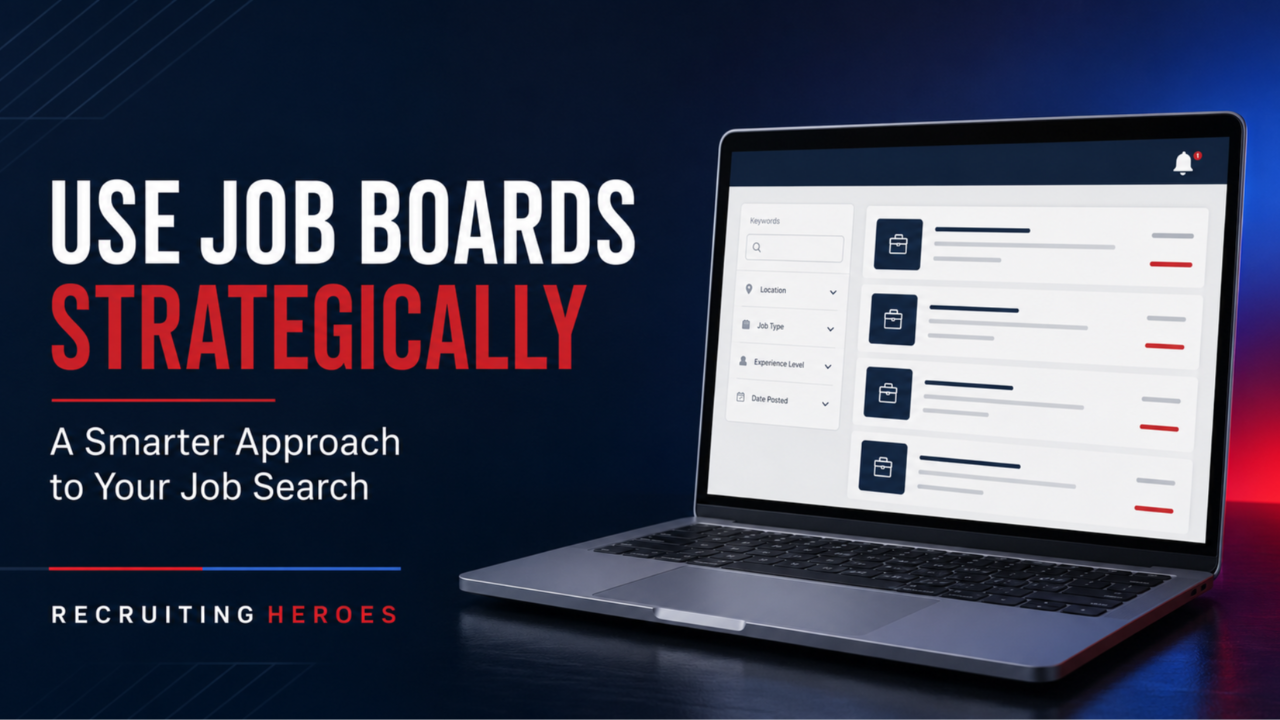
Job boards can provide access to thousands of opportunities, but access alone does not guarantee results. Many job seekers find an opening, submit the same resume, and move on to the next application without conducting any additional research or follow-up.
That approach can quickly become frustrating.
Job boards are most effective when you use them for more than submitting applications. They can help you identify potential career paths, understand what employers value, research salaries, discover growing industries, and develop a more focused job-search strategy.
This is especially important for law enforcement professionals transitioning into the private sector. Your ideal position may be listed under a job title you have never considered.
I recently created a video explaining how to use job boards more strategically. You can watch the full video here:
Choose the Right Job Boards
Not every job board will provide the same opportunities. Some platforms cover nearly every industry, while others focus on specific professions, locations, or types of employment.
Most candidates should begin with larger platforms such as:
-
LinkedIn Jobs
-
Indeed
-
Glassdoor
-
ZipRecruiter
These platforms offer a large number of openings and allow you to search by job title, location, experience level, salary, work arrangement, and other criteria.
You should also explore industry-specific job boards. Depending on your background and career goals, these may include:
-
ClearedJobs.net for positions requiring security clearances
-
CyberSecJobs.com for cybersecurity opportunities
-
USAJOBS.gov for federal government positions
-
iHireLawEnforcement for law enforcement and public-safety roles
Company career pages are also valuable. Some employers publish opportunities on their own websites before promoting them elsewhere. If you are interested in a particular organization, bookmark its career page and review it regularly.
In the video, I discuss how to combine broad job boards, specialized platforms, and employer career pages to expand your reach without making your search unmanageable.
Watch the full lesson here: https://youtu.be/HsuL7yxZF0s
Use Job Boards for Career Research
Job boards should not only be viewed as places to apply. They are also valuable research tools.
Reviewing job descriptions can help you understand what employers expect from candidates. Pay attention to the qualifications, skills, certifications, software platforms, and experience that appear repeatedly across similar openings.
For example, a former law enforcement professional interested in corporate security may notice employers frequently requesting experience in:
-
Threat assessment
-
Workplace violence prevention
-
Executive protection
-
Emergency management
-
Physical security systems
-
Investigations
-
Risk assessment
-
Crisis response
-
Vendor management
This information can help you determine whether your resume communicates the right experience. It may also identify a certification, technical skill, or knowledge gap that could make you a stronger candidate.
Job boards can also help you compare opportunities across industries. A former investigator may qualify for positions in corporate investigations, fraud prevention, compliance, loss prevention, financial crimes, due diligence, or trust and safety. The responsibilities may overlap even when the job titles are very different.
Do not limit your search to titles that resemble your law enforcement rank or assignment. Search by transferable skills, responsibilities, and business functions.
Research Salaries and Career Potential
Salary research is another important part of a strategic job search.
Compensation can vary significantly based on the position, employer, industry, location, and level of responsibility. Review multiple openings to identify realistic salary ranges for the roles you are pursuing.
You can also use salary information available through platforms such as Glassdoor and Levels.fyi. Compare this information with the requirements included in actual job postings.
Avoid assuming that years of law enforcement service automatically translate into a specific private-sector salary. Employers will evaluate how directly your experience aligns with their needs and how clearly you communicate your value.
Salary research can help you target appropriate positions, prepare for compensation discussions, and avoid pursuing roles that do not meet your financial needs.
Set Up Targeted Job Alerts
Popular positions can attract applicants quickly. Job alerts allow you to learn about new opportunities without repeatedly running the same searches.
Set up alerts using your preferred job titles, locations, industries, and work arrangements. Daily alerts are often the most helpful for an active job search.
Do not create an alert for only one title. Private-sector employers frequently use different titles for similar responsibilities.
Someone pursuing corporate security opportunities might create alerts for:
-
Corporate Security Manager
-
Physical Security Specialist
-
Security Operations Manager
-
Threat Management Specialist
-
Loss Prevention Manager
-
Global Security Investigator
A candidate interested in compliance or investigations might also search for:
-
Compliance Investigator
-
Fraud Investigator
-
Risk Analyst
-
Due Diligence Specialist
-
Financial Crimes Investigator
-
Background Investigator
The goal is to identify relevant opportunities early while also learning how different employers describe similar work.
I provide additional guidance on setting up effective searches and alerts in the video:
Watch here: https://youtu.be/HsuL7yxZF0s
Track Every Application
An organized job search is much easier to manage.
Without a tracking system, you may forget where you applied, miss follow-up opportunities, submit duplicate applications, or walk into an interview without remembering the original job description.
Your application tracker should include:
-
Job title
-
Company name
-
Link to the position
-
Date submitted
-
Resume version used
-
Recruiter or hiring manager
-
Current status
-
Follow-up date
-
Notes from conversations or interviews
Save a copy of every job description. Employers sometimes remove the original posting before interviews begin. Keeping a copy allows you to review the responsibilities, qualifications, and preferred experience as you prepare.
You should also create a dedicated email folder for application confirmations, recruiter messages, job alerts, and interview information.
Follow Up Professionally
Following up can reinforce your interest and help you stand out, but your message should be concise and professional.
Consider following up approximately 7 to 10 days after applying unless the posting provides a different timeline. Briefly express your continued interest, mention one or two reasons your experience aligns with the position, and politely ask whether there are any updates regarding the hiring process.
Whenever possible, identify the recruiter, hiring manager, or department leader associated with the opening. LinkedIn can be helpful for finding the appropriate person and learning more about the team.
The goal is not to demand an answer. It is to introduce yourself, communicate your potential value, and show genuine interest in the opportunity.
Build a Smarter Job-Search Strategy
Submitting more applications does not always produce better results. A targeted and organized approach is usually more effective than applying indiscriminately.
Use job boards to understand the market, discover potential career paths, evaluate employer needs, improve your resume, and identify the right opportunities.
Your resume and LinkedIn profile are important parts of the process, but they must be supported by a strategy for finding positions, tracking applications, building relationships, and following up.
If you are preparing to leave law enforcement or actively pursuing a private-sector career, I encourage you to watch the full video. It will walk you through practical ways to use job boards more effectively and bring greater structure to your search.
Watch the video here: https://youtu.be/HsuL7yxZF0s
Recruiting Heroes helps law enforcement professionals, first responders, and veterans successfully transition into private-sector careers. Our services include professional resume writing, LinkedIn optimization, interview preparation, career coaching, and comprehensive job-search support.
To learn more, visit: